Your cart is currently empty!
Category: Assistive devices and medical accessories
-

Why Choose a New Lift Chair?
The Manufacturer’s Warranty: Your Peace of Mind
When you invest in a new lift chair, one of the key advantages is the manufacturer’s warranty. This means that the manufacturer commits to covering repairs or replacements in case of manufacturing defects during the warranty period. This peace of mind is invaluable as it protects you from potential issues that may arise.

Pride, Elran, and Golden Technologies, the brands distributed by Équipements Adaptés MCL, are renowned for offering robust warranties, ensuring that your investment is well protected. These warranties typically cover a variety of components, including motors, lifting mechanisms, and electrical systems. This allows you to relax knowing that your electric lift chair will perform optimally for many years.
But there’s more! What makes Équipements Adaptés MCL’s warranty offering even more advantageous is that the warranty is honored directly by us. You won’t need to contact the manufacturer in case of issues. Additionally, any necessary repairs are carried out in-house, in our repair workshop, guaranteeing prompt and efficient assistance when needed.
Proper Dimensions: Avoid Chronic Muscle Pain

When you purchase a used lift chair, it’s challenging to ensure that its dimensions are a perfect fit for your needs. This can lead to posture problems and discomfort, which can result in chronic muscle pain. Every individual is unique, and an ill-fitting chair can have adverse effects on your well-being. Opting for a new lift chair allows you to obtain a customized model with perfect dimensions, ensuring optimal comfort.
Long-Term Savings: More Than Just Economical
While the idea of saving money in the short term by buying a used lift chair may seem appealing, it’s important to consider potential long-term costs. Frequent repairs and unexpected replacements associated with used chairs can end up costing more than the initial purchase of a new model. By investing in a quality new lift chair, you significantly reduce the risk of unforeseen expenses, which is crucial for electric lift chairs that may require specialized repairs.

Make the Smart Choice with Équipements Adaptés MCL
At Équipements Adaptés MCL, we understand the importance of providing our customers with the best quality and service. Opting for a new lift chair is a smart choice for your health and comfort. Our range of lift chairs from the brands Pride, Elran, and Golden Technologies guarantees quality and durability. We invite you to browse our online catalog of new lift chairs. Feel free to contact us to schedule an appointment with an advisor who will guide you to the perfect choice for your needs.
Investing in your well-being and comfort with a new lift chair is a wise decision, and Équipements Adaptés MCL is here to support you at every step of the process. Remember, the warranty is your best ally for complete peace of mind.

-
How to buy a used electric bed?
Buying a new hospital-style bed for your home can be a burden, especially in this current economic climate. For many, the world of hand-me-downs and pre-owned equipment remains the soundest budgetary decision. But don’t let the lower prices alone tempt you. It might be a great deal for some, and for others a nightmarish puzzle of parts and research before even lying in bed.

Before finalizing your purchase, it is a good rule of thumb to do your research and inspect the equipment and its components thoroughly. Take your time and give it a good look, scour every nook and cranny and even give it a try. Avoid any unnecessary stress and follow our guidelines. Don’t forget: you are shopping for medical equipment and not a luxury articulated bed from those big retailers.
The Mattress
First, let’s talk about the mattress. Being the central cog in all this sleep operation, this is the surface you will be in contact with the most. Most electric care beds will be paired with a therapeutic mattress such as the Glissando and Solace. Depending on your condition or needs, the mattress supplied might not be adapted to the situation.

Needless to say, it is a good idea to inspect the mattress surface for any tears, deformations and discolorations. If the cover is torn, weathered or discolored, the risks of urine, humidity or other filth infiltrating the foam is high. If the foam mattress is deformed or dry and flaky, the condition is dubious at best. Our tip: opt for a new preventive care mattress if your means allow for it. Due to the nature of care mattress use, you might be taking the risk of exposing yourself to urine, blood, fecal matter and other body fluids. On top of that, you might be inviting a bedbug colony to your home. If the water-resistant cover and the foam inlays seem in good condition, and that the original residence of the bed is infestation free, you could most likely keep the used mattress. A good scrub, decontamination and quarantine period for the mattress should be done before use.

The Frame and Mechanism
The next step will be to inspect the base of the hospital bed and the mechanical components attached to it. The base of the bed is where all the articulated magic happens. The best test is to try it yourself. Grab the remote, press on those buttons and make it move. First of all, does it even function? If it does, is it overly noisy and creaky? Do all the parts move fluidly, or does it seem labored and janky? Do the motors seem to work harder than necessary? Take the time to inspect the wiring and connections for any fraying, disconnections or outright breakage. While you’re at it, look at the condition of the paint and metal of the articulations. If you see rust, you see structural weakness bound to happen.
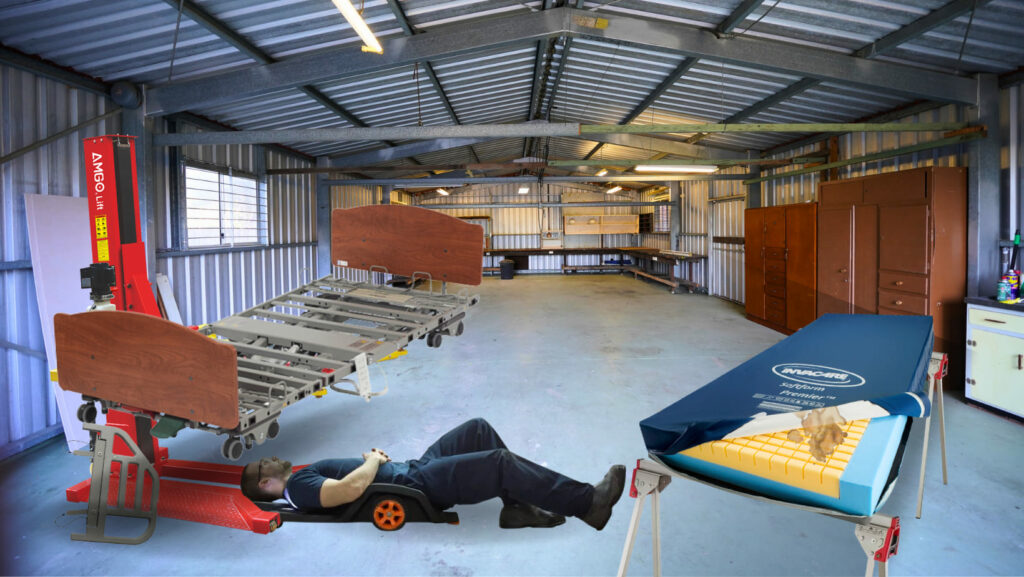
The mechanism is usually covered by the manufacturer’s warranty (if the bed isn’t too old). This doesn’t mean that their assistance will be completely free, but don’t let that stop you from trying. If all the parts and components seem functional and in good condition, a little cleaning and greasing will do the trick to restore it. If you are uncertain of the condition and of your decision, you can have the bed inspected by our repair specialist in our workshop.
The Parts and Components
The last thing on your checklist should be the parts and components. More specifically, if said parts are still available or discontinued. Manufacturers have a tendency to discontinue certain lines of production and support system for certain products, making them obsolete. If that is your case, repairing and maintaining your electric hospital bed might be difficult if not impossible. If the bed model is old enough, your bed rails might not comply with today’s safety standards. If parts are available, then that’s good news for you! The bed’s integrity and longevity can be maintained so long as you have access to these parts. Equipment of this size and price is not something you want to shop for every year. Once inside, it’s meant to stay.

The most important thing will be to check the availability of electronic components. A lock pin can easily be changed for another model or solution, but if your control module short-circuits and the part isn’t available, you’re dead in the water. The hand control pendants are usually not interchangeable as well. If the scissor mechanism is damaged or defective, but the control module is functional, your articulated bed will still be immobile. In fact, you risk further damaging the hospital bed by trying to use a defective model. To figure out if the electric bed you are looking at still has available parts, you simply have to look on the internet. The model number will be required. If that is not an option for you, you could always give us a call. Our experts will gladly help and guide you with the proper information.

Make yourself a checklist. Check every box and note any changes or repairs to be done. Weigh the pros and the cons of buying a used bed and compare your investment with the price of a new bed. The bed is in good condition, but you’ll need a new preventive care mattress? Your bed guard rails are full length and will need to be changed for half-length rails? Be certain to have inspected every nook and cranny possible before proceeding with your purchase. Used equipment might be more affordable, but you will have no warranty or guarantee to fall onto in case of a problem.
Be absolutely sure and confident in your decision. A used electric homecare bed can easily cost you the price of a new model if you aren’t wary enough. You can call on us for any verification, troubleshooting and to compare prices. Our team will gladly inform you about the possibilities, alternatives or to help you move your adapted equipment. Shop wisely and carefully!

-

How to choose the right orthosis?
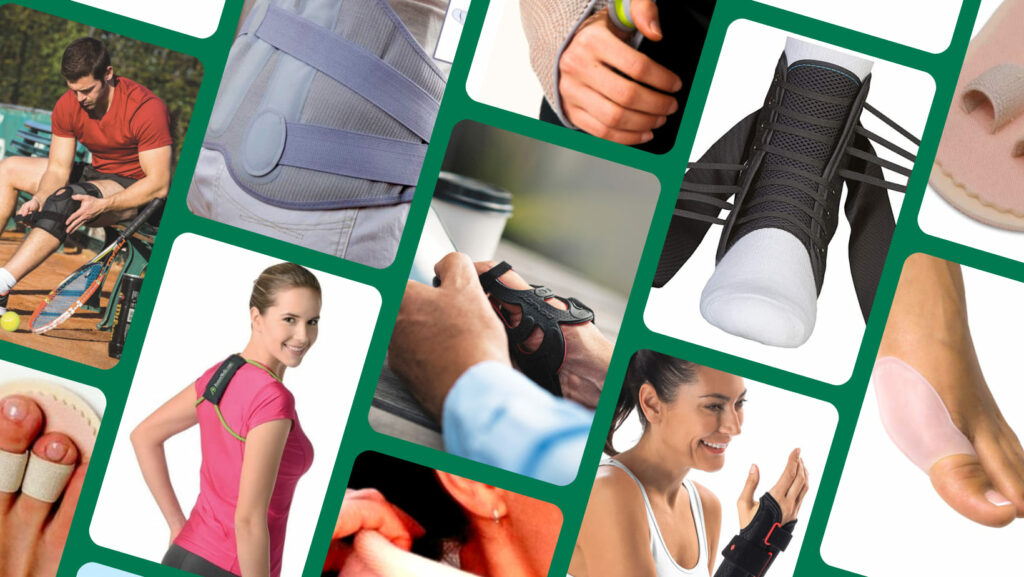
The field of orthopedics can seem complicated and intimidating when uninitiated. For unusual or specific cases, there are orthopedic specialists out there that can offer tailor made solutions. But what about the most common conditions? The world of over-the-counter orthoses can rapidly become daunting and heavy if not guided by a well-informed expert. Word to the wise: it is always a good idea to have your doctor or physiotherapist evaluate your needs or injury before launching yourself in your shopping. Your healthcare provider is best equipped to determine what condition ails you and guide you toward the proper treatment plan. A second piece of advice: your healthcare professional will be able to guide you towards the right type of orthopedic product to help you, but a renowned orthosis and splint expert will be able to guide you through the myriad of seemingly identical products.

That being said, there are a few generalities and tips we would like to share with you to help you through the process. Choosing the right orthosis or splint can be the difference between a speedy recovery or a surprise complication.
The Right Support, a Question of Terminology

Orthosis, prosthesis, splint… They’re all the same, right? Wrong. A prosthesis replaces a missing limb or body part. Orthoses can wear many hats. To simplify the definition, they are generally used to assist or facilitate limb function and motion that has become difficult, painful or deficient. Think physiotherapy. And a splint? Well, that’s just a type of orthosis used to immobilize an injured or painful limb. A sling holding a broken arm in place is a good example. Here are a few more examples to help you understand:
 A breast form? We’re talking about a prosthesis here.
  A mechanical foot? Also a prosthesis.
  A back support belt? Bingo! The belt promotes proper posture and flexion during physical activities to insure adequate function and limit risks of injury. By supporting and assisting proper body function, the support belt falls under the umbrella of orthoses.
  A profiled stabilizing sling? If you remember correctly, it is an orthosis although more specifically called a sling.
Orthopedic braces and splints are usually paired with physiotherapy exercises, stretching and even neurostimulation treatments on occasion. These exercises are essential for recovery or to strengthen a weakened, possibly aging, articulation. This helps promote healing and recovery, as well as limiting the chances of further injury or complication.

Wearable Therapy

What about usage? As already established, orthoses are usually meant to stabilize or assist limb function and articulations. How this is achieved will depend on the situation and the needs of the user. For a hernia, a support truss will apply sufficient pressure to maintain everything in place. This will help alleviate pain while waiting for an operation. Are you pregnant or do you lift heavy loads regularly? A lumbar or maternity support belt will maintain correct posture and limit the risks of injuring yourself. Is it tendinitis or rhizarthrosis? A wrist or thumb stabilizing brace can help reduce pain due to over usage of your thumb or wrist while limiting damaging motions of the limb. You have a bum knee or an ankle sprain? A wraparound knee brace or ankle stabilizer (or even a walking boot) will help support your weight. And don’t forget, all of this is generally matched with stretching, exercises or physiotherapy.
As you can see, there is a veritable myriad of possible equipment and solutions out there. As stated above, it is good practice to check with your healthcare professional to ensure that your needs are met, and to have an informed specialist assist you in choosing the right product for you.
Head, Shoulders, Knees, and Toes
So, if a limb is painful, you just have to brace it right? Not quite. Depending on the condition, the part of the body to treat and support might be different than where the pain originates. A painful wrist might in fact be a pinched nerve in your neck or shoulder. Your caregiver will be able to diagnose what the situation is, and from there the correct type of orthosis will be determined. There is an orthosis, brace or splint for almost every body part and their associated conditions. Making a complete and detailed list would be a daunting affair that would only serve to further confuse a potential shopper. They can be grouped in 5 general anatomical regions to simplify the categorization: the neck and shoulders, the arms (elbow, wrist, hand), the abdomen and back, and legs (hips, knees, ankles, feet).

But remember: the painful region might not be the area to support. A painful and tingling wrist or fingers could be tennis/golfer elbow. In this case, the orthosis will be worn on the elbow and not the wrist or fingers themselves. Furthermore, if an orthosis is worn for extended periods or in an improper fashion it might have the inverse effect of atrophying the muscle instead of restrengthening it. It is of the utmost importance to follow the guidelines and exercises prescribed by your caregiver to avoid further aggravating the problem.
As you can see, the world of orthopedic braces and splints can be quite the affair. Whether you need ongoing support for a specific condition or temporarily for recovery, orthoses can help you find your Mobility, Comfort and Liberty once again. Whether it be a sling for a broken arm or a hernia truss, we can help you find the correct tool for your needs.
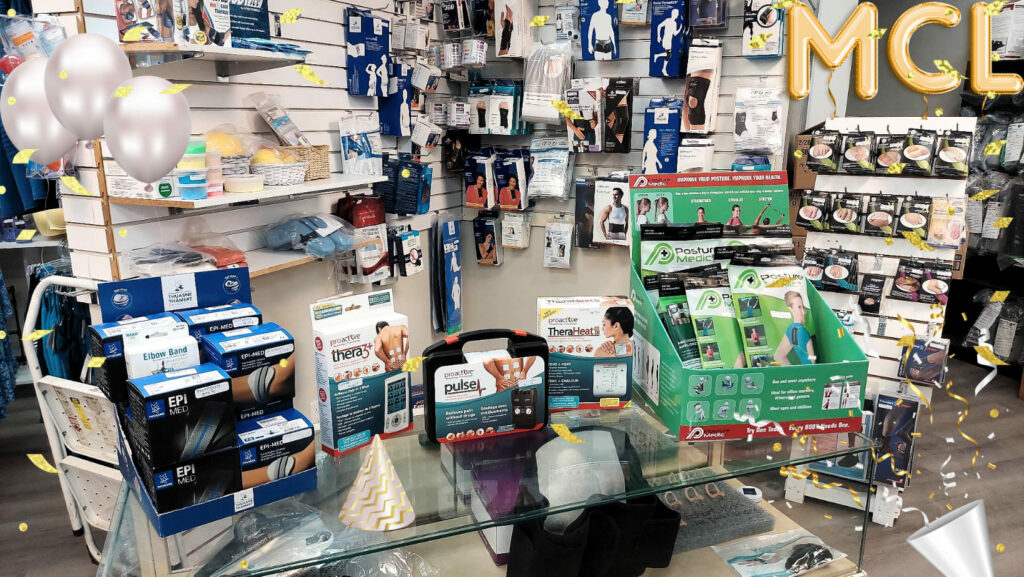
At Equipement adaptés MCL, we hold a wide variety of over-the-counter orthoses to cover a range of conditions and situations. Our experts can and will gladly help guide you towards the proper equipment. But we can’t stress this enough: your healthcare specialist will determine if an orthosis is the proper solution, and our experts can guide you towards the proper model for your needs. Happy recovery!

-
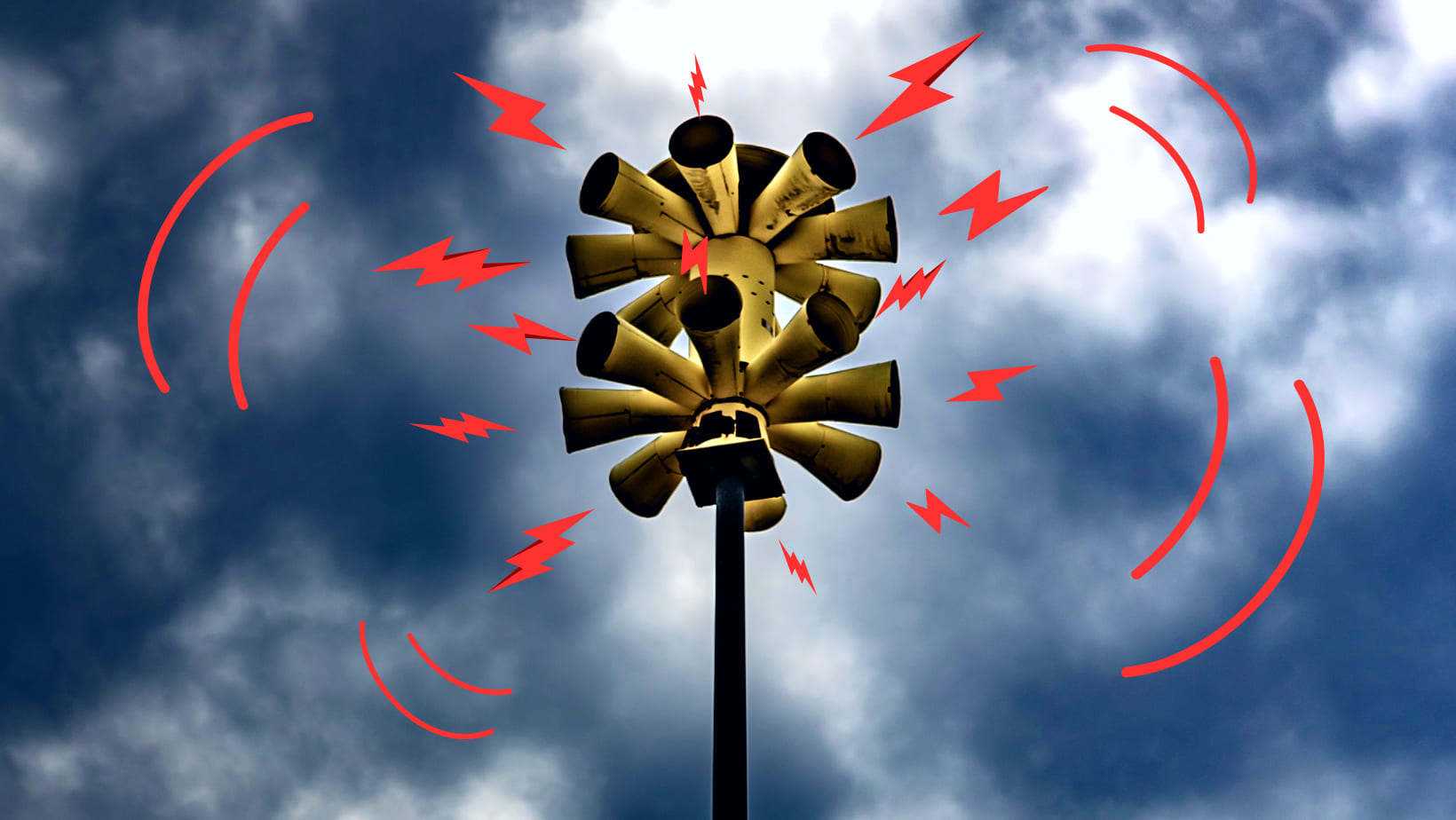
What Are the Different Types of Medical Alert Systems?

What is more comforting than the feeling peace and security inspired by the safety of our home? Unfortunately, many have to face difficulties and conditions that make their home a little more hazardous. Whether it be living with or with someone affected by reduced mobility, altered cognitive functions or even raising a kid, your house can present a plethora of new challenges and risks. But have no fear, we have a few tips and solutions for you!
Watch Your Step!

Did you know that falling was the leading cause of injury? 20 to 30 percent of will fall at least once in the year, on average. 85% of elder hospitalizations are due to injuries received during a fall. This might seem alarming at first, but have no fear! There are a few tools out there to help with the prevention of falls and their associated injuries.

Wireless sensor pads, paired up with a cordless monitor, makes it possible to intervene as soon as a fall occurs. These pads come in a couple of formats. Sensor bands are generally used for bed surveillance while sensor cushions will be used on wheelchairs, couches and other seats. The internal system is activated when pressure is registered by the pad. When the weight is removed, a signal is sent to the wireless alarm monitor that will alert a nurse or caregiver that help is needed. Although they will not prevent a person from falling, these sensor mats will allow for a faster response time. Alternatively, or as added security, you might opt for a nurse call button. The at-risk person could press the button, if conscious of course, to call for help in the event of a fall or to prevent one. By acting quickly, you will be able to call emergency services or assist the victim before the situation worsens.

If it is injury prevention you are looking for, then you might want to use a safety fall mat. These mats are places at the foot of a bed to cushion the impact of falling. They are made of high-density foam that absorbs and disperses a part of the shock to limit the risks of injury.
Where Am I?
If falling doesn’t worry you, but you have a tendency to misplace your relative, you might be facing a wandering situation. While sensor pads could be useful, a better approach would be to use smaller and subtler tools to monitor exit points. It’s a good practice to try and camouflage the devices in the natural environment of the wanderer, as to not cause any unnecessary confusion or anxiety. As an added bonus, you’ll ensure that your surveillance system won’t be tampered with or removed.

An infrared motion sensor is usually small enough to hide in plain sight. Often installed at the foot of a bed or doorframe, the sensor sends a signal to a monitor or pager when the detection line is broken. For exit points, such as doors and windows, a magnetic sensor or transmitter bracelet could be used. They are small enough to disguise in a room and will alert you when the person being cared for approaches or opens a door/window. In some situations, a magnetic locking system may be added in conjunction to a transmitter bracelet system for added security to completely seal the exit before an attempt is made. You might not be able to stop the hankering for a wander, but you can still make it safer with the right equipment.

For the Occasional Leak
We have all, one in our life, dreamed of a toilet and the promise of sweet release. We have all been woken by its warm deception… Whether it a childhood hurdle or an adult incontinence problem, it is always an uncomfortable and disappointing situation to deal with.

To address this problem, the EnuReflex Clinic (a 100% Québecois business) developed their bedwetting alarm system: The Urine-Alert. This all-around urine detection system can help deal with enuresis (bedwetting), potty training of you kids, diaper rash, dermatitis, bed sores, adult incontinence problems and with homecare situations with a bedridden person. Using the system is as easy as your ABCs. A detection band is inserted into the underwear or diaper that is connected to an external and wireless monitor, a vibrating puck or both. When the band detects moisture, a signal is sent to the monitor and puck. The monitor alerts a parent or caregiver before the wetness becomes unbearably uncomfortable. The puck is used slightly differently. It is generally inserted under the mattress or the pillow of the sleeper. The vibration helps to condition the sleeper to wake-up before having to go and reinforcing the vesical sphincter in the case of enuresis. Available to rent or own, depending on your needs, the EnuReflex will help you find the comfort and assurance to sleep soundly. Nighty-night!

As you can see, there is a plethora of systems and solutions out there to help make your home a safer and more comfortable environment for you and your loved-ones. Whether it be heightened surveillance, a quicker response time, at home or in institutional settings, there is a medical alert system to assist you.
At Équipements adaptés MCL, our experts are able and ready to support and inform you along your journey and decision-making process. We have access to a variety of excellent alert systems, and we know the hardships and challenge of making your home a safer and adapted nest. It would be our pleasure to help you find the right tools for you, or simply to give you a few tips!

-

How to pick the right posture pillow ?

A good restorative sleep is important for your health. Unfortunately, many medical conditions may hinder the quality of your sleep, such as muscular or skeletal illnesses. In such cases, it can be helpful to maintain a good sleeping posture in order to protect your comfort during the night.
Getting on your good side

In which position do you sleep best ? Some pillows are designed for side-sleepers, while others a better for those sleeping on their back. The ideal sleeping position depends on your particular health condition, of course, but it is mainly a question of personal preference. After all, we aren’t in your pajamas, only you can know best how sleep comfortably.
Pillows for sleeping on the side are usually thicker, and have a curve designed to fill the empty space between the shoulder and neck. Such a design aligns your neck with your shoulders all the while maintaining the horizontal orientation of your head.
Pillows for sleeping on the back are thinner, and have a slight curve at the nape of the neck. This cushioning positions the head horizontally, preventing unwanted craning of the neck, either by pushing the head forward (with your chin towards your chest) or backwards (with your chin towards the ceiling).
Some pillows, such as the Ortho-Cerv, can fit both positions. You only have to orient the pillow the right way so the cushions support your head adequately. As with every pillow, you need to pick the right size, or else it won’t be able to support your head.
Lean back and sleep tight

If you have respiratory issues, sleeping with an incline of the back may provide you comfort. If your condition is temporary, as with a surgery recovery or a simple seasonal affliction, it is generally exaggerated to buy an electric bed for its articulated back. In such circumstances, a triangular body wedge cushion can provide you with the relief that you need. These wedge pillows will prop your back towards the front, which should ease your breathing when sleeping. The right size of the cushion, and as such the degree of the tilt it will provide, will depend on your personal measurements. The right cushion cover will depend on your particular comfort needs. Generally, the Orthex triangular cushions are comfortable options, as they have a soft coconut cover.
The right placement of the body

Regardless of your preferred sleeping position, it might become the case that your medical condition requires positioning aids during sleep. If you need to have your legs raised, or your hips aligned a specific way, or your knee held in a bent position, you can use a specialized cushion. All kinds of positioning pillows are available, for example, a body posture pillow is ideal to sleep on the side, with the knees supported in a way as to avoid the crossing of the hips.

To conclude, the right pillow could be what is missing for a comfortable and restorative sleep. Source of well-being, postural cushions will help you to limit pain caused by skeletal and muscular ailments. Do keep in mind that pillows and cushions are comfort tools, but are not by themselves a cure for pain. It is always possible that you find a theoretically perfect pillow to be uncomfortable, or the other way around. Your comfort is yours, but at Equipements Adaptés MCL, we can help you find it.

Here to find your Mobility, Comfort and Liberty!
-

How to Choose the Right Catheter ?
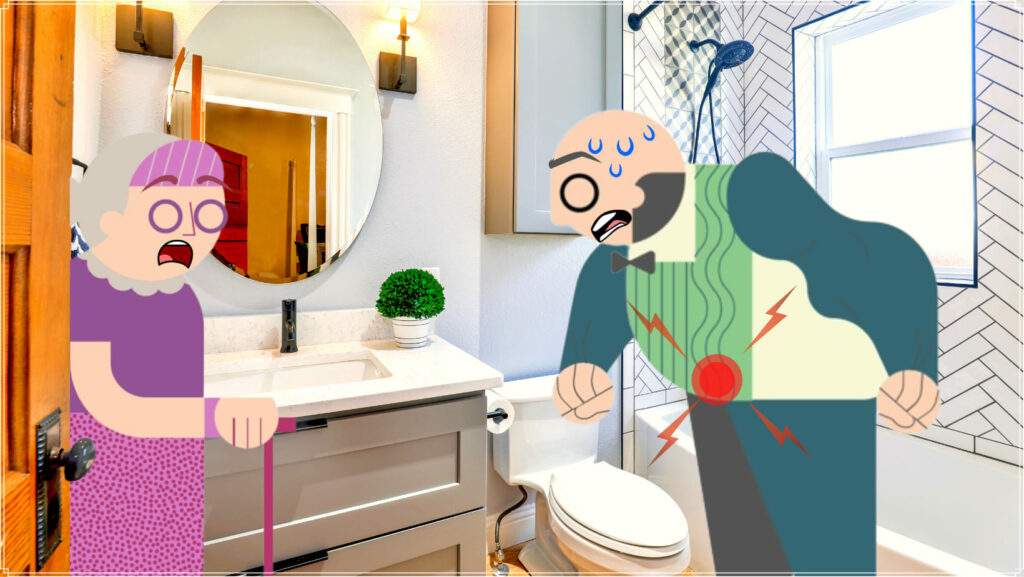
Many health conditions can cause the need to use a catheter on a daily basis. Depending on your particular medical needs, the type of catheter, and the context in which you will have to catheterize yourself will change. It therfore is of paramount importance that you consult a healthcare specialist in order to find the right type of catheters for you.

That being said, the incredibly wide variety provided by the manufacturers can make it difficult to find the right urinary product for you, even for trained specialists. Ultimately, you will be the one to live with the consequences of the choice of catheter. As such, it can be helpful to explore the available options. Furthermore, if you are helping a relative or loved one in their daily struggles, it can be interesting to learn how urinary catheters are used, if only to provide a favorable environment.
The Usage of Catheters

All catheters are not used in the same context. Intermittent catheters
 are used to empty the bladder as needed, which can occur one to six times per day. Closed-system catheters
  gather urine in an attached bag
  , either hung near the bed strapped to the user’s leg, and are used to measure the quantity of urine produced over a given time. Foley catheters
  are built with a balloon in order to affix them inside the bladder, to provide a more permanent catheterization.
 Some urinary catheters are packaged in a way to make them easily used, especially while on the road or when travelling. These urethral catheters are often pre-lubrified and packaged to avoid contamination when inserted.
For every-day use, inside the home or in a clean and sanitary environmnent, it is possible to buy the lubricant and sterilizing towelettes of our choice, in order to provide optimal comfort when using catheters.
The Caracteristics of Urinary Catheters

Catheters are specified by their material, length, tube diameter, and shape of the tip.
Catheters are made of different materials, including latex. If you have an allergy, it is extremeley important to verify what material the catheter is made of before using it, as it could cause significant irritation or other serious complications.
Vesical catheters are fabricated on differing lengths, mainly distinguished between men-sized and women-sized. Because of their longer urethra, men generally need urinary catheters around 40cm in length. Women and children typically need a shorter sound, and can use catheters that are anywhere from 7 to 20 cm long.

Urinary catheters are available in many sizes. The diameter of catheters is normally measured based on the French Gauge (FR) scale, in French called the Charrière (CH) scale. This scale is based on the metric scale, where one French is equal to one-third millimeter. This means a 3FR is equal to 1mm. The right size of a catheter should be determined by a health specialist. Too small a tube will cause leaks, but too wide a tube can cause serious discomforts or even wounds.

Catherers can be straight or curved. Tiemann catheters, sometimes labelled as “coudé”, have a slight curve on its insersion tip. That curve is to make it easier to push the sound all the way to the bladder by following the natural curves of the urethra. This is particularily useful for men, since they are easier to handle so they don’t get caught in the prostate or in the bladder neck.
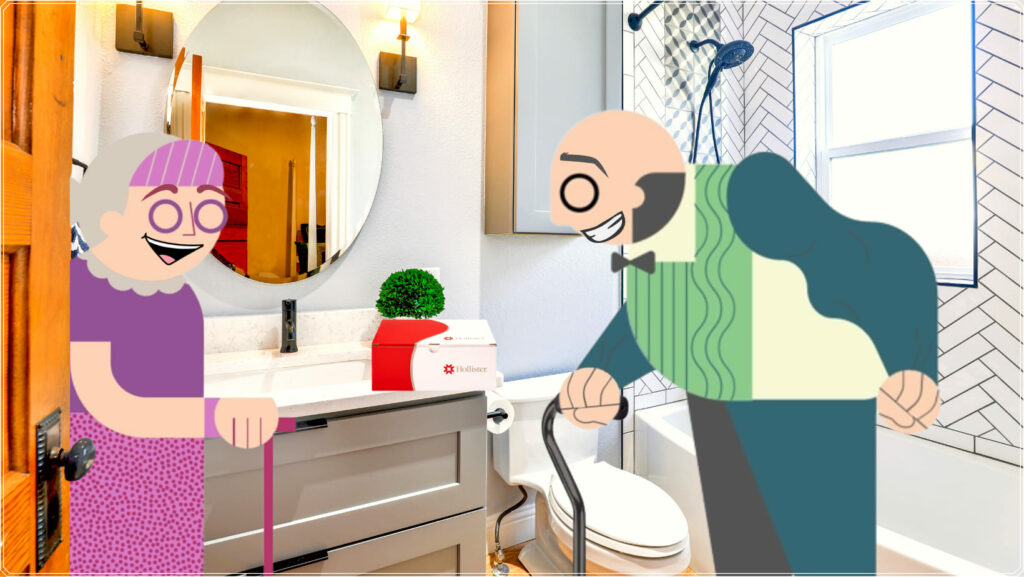
Ultimately, your healthcare specialist will be the best suited to inform you about your catheterization needs. Still, take the time to reflect on your personnal preferences, and note the caracteristics of the catheters that are recommended to you by your physician. That way, you will be able to compare for yourself the different urinary products that are available to you, so that you can find the safest, most comfortable, catheter system. You can also contact us, here at Équipements Adaptés MCL, in order to learn more about the urinary and urology products that are available on the market.

Helping to find Mobility, Comfort and Liberty !
-
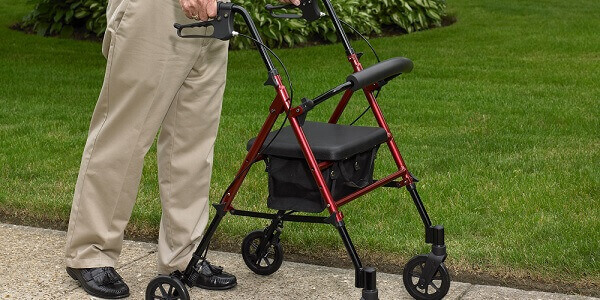
5 things to consider before buying a rollator
Rollator or walker?
Let’s start by distinguishing the language around walking aids. “Wheeled walkers”, “rollators with seat”, “foldable walking aid”, etc. There is a long list of terms attributed to rollators.
A walker is a wheeled frame designed for indoor use. It is recognized by its two small front wheels and two rear skids, or skis. It doesn’t have a seat, but we can easily add a tray or a basket to it.
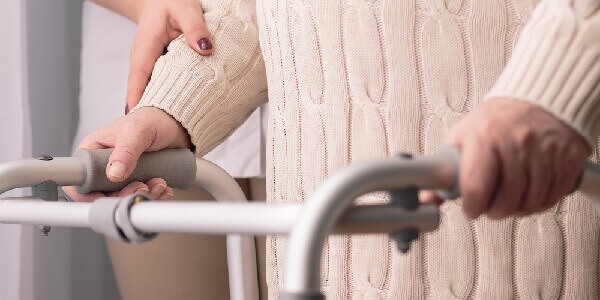
The rollator, conversely, is designed for outdoor use. It sports four bigger wheels which can soften the bumps and cracks in the grounds. With its seat, one can sit to rest when walking over long distances would otherwise be impossible.
So you want a rollator. Sure, but which one ?
There are five main characteristics you need to consider to find the right rollator for you.

1. The height of the seat
On most rollators, the height of the seat is fixed to the frame. Therefore, you have to choose the right one.
It might seem obvious that the higher you are seated, the easier it will be to stand back up. That said, there is such a thing as too high a seat.
First, your feet should rest firmly on the gorund to ensure the greates stability when standing back up. Then, your knees should be at about 90° to the hips or lower. If the knees are too low, the seat will cause a pressure on the calf, which can reduce blood flow and cause numbness in the legs, which can present a risk of falling.
Broadly speaking, for a person of a height of :
4’3’’ to 5’5’’, we recommend a seat height of 18’’.
5’ to 6’2’’, we recommend a seat height of 20’’.
5’9’’ to 6’11’’, we recommend a seat height of 23’’.
Of course, these measurements aren’t set in stone. In any case, we recommend you consult with your health specialist, or one of our salesperson in the store to find the right seat height for you.
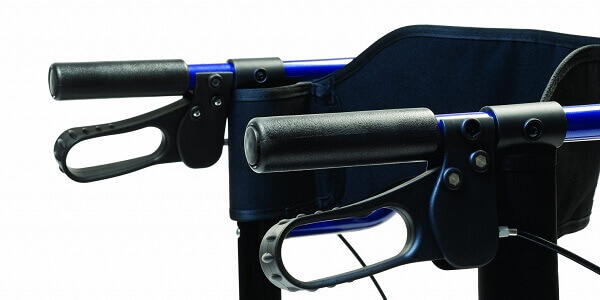
2. The shape of the backrest
All rollators have a backrest, but not all are as comfortable as the other.
Of course, comfort is such a personnal concept as to make it impossible to predict which one you will prefer. Which is why it usually best to come by the store and try them out.
Broadly, a larger backrest will provide a better lombar support, which might make it more comfortable.
Of course, a rollator isn’t your favorite armchair, as it isn’t designed to be seated for many hours. Nevertheless you can reasonably expect to be comfortably seated for 20 to 30 mins while resting from your walking.
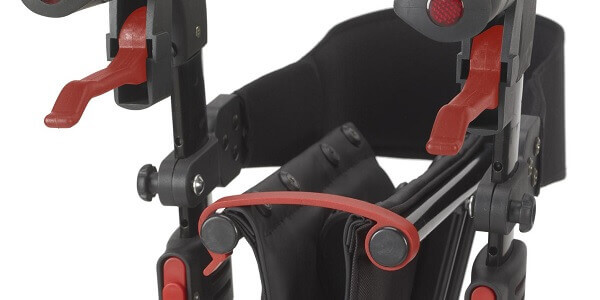
3. The folding system
Rollators can either fold laterally or vertically.
The laterlly folding rollators can stand on their own after having been folded. As such, they take up very little space in your car’s trunk or beside the dinner table.
It is also much easier to handle by those of limited upper body strenght or fine dexterity.
Vertically folded rollators, although they cannot stand on their own when folded, generally have a sturdier seat, which is often padded, providing greater comfort while seated.
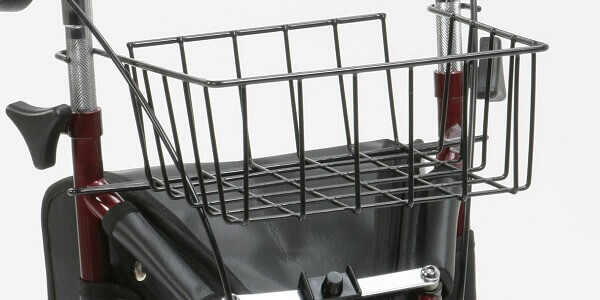
4. The basket
Flexible or rigid ?
The rigid baskets are much more resistant than their flexible counterparts, which can tear after some time. The flexible baskets can be left of the rollator when folding it, whereas the rigid ones need to be removed and reinstalled each time.
5. The use … Is a rollator really what you need ?
Ask yourself a few questions :
Do I find myself needing to rest but unable to find a seat ?
Do I limit my outdoor activities because I cannot go for long distances without needing to sit ?
To I sometimes have trouble with my balance and risk falling down ?
If you have answered “yes” to any of these questions, the rollator might just be what you are looking for. A wide range of choices are available, and it will be our pleasure toguide you through you tryouts in our store, if only to see if you like them.

Is it worth it to rent one?
Renting a rollator for a long period of time quickly costs as much as buying one.
Nevertheless, if someone isn’t sure if the rollator is the right product for them, it might be worth it. If you are without the counsel of a health specialist, it might be wise to try a rental for a few weeks in order to figure out for yourself if you are comfortable and safe when using a rollator.

How to choose where to buy your rollator ?
Before buying your rollator anywhere, choose wisely.
The price is an important factor to consider, of course, but it isn’t the only one.
All rollators have a manufacturer’s warranty on potential defects, and it is important the store you buy from honours these warranties.
Is there anything more frustrating than being told to call the manufacturer yourself when you need repairs ?
Here at MCL, we take that responsability.

Rollators are usually sturdy products, and very few parts break down. But given a few years, some repairs might become necessary. Make sure the store you buy from is able to make those repairs.
Here at MCL, we can repair any rollator we sell, and keep a stock of spare parts so you don’t have to wait too long for your repairs.
Someone who needs a rollator usually needs it every day and cannot deprive themselves from it for very long.
Here at MCL, we understand that reality, which is why a repair shop is right in our store. With an appointment, your rollator can be repaired on the spot, meaning you won’t need to leave it for many days.
Take a look at the rollators section of our website, call us, or come by our store, to find out if we have the right parts. For any other questions, take a look at our Contact Us page where you can find our contact information.
Whether you are shopping for yourself or someone close to you, it is important that the rollator fills your needs. Here at MCL, we are there to help you find it.
-

How to choose the right incontinence product?
Why shop at aspecialized store for incontinence products?
We are all rushed by our busy schedules and as such, time is precious. It seems easy to stop at a pharmacy or a wholesale store to buy products in great quantities. But is it really better than to shop at a specialized store ? Of course not.
Confronted by a multitude of differing products, without knowing the subtle particularities of each, it is easy to get lost in all the possibilities. As such, we buy haphazardly, trying randomly products until we find the right product, or give up and stick with the one “close enough”. All these tryouts eventually tally up to a substantial sum, and considerable discomforts. Specialized stores such as Équipements Adaptés MCL Inc. have trained personnel that can provide answers to your questions and custom solutions to your particular needs.
Urinary incontinence or fecal incontinence?
Depending on the type of incontinence, the right choice of product may vary. The absorbency required for severe fecal incontinence will be greater than that of moderate urinary incontinence, for example.
The time of day when it is needed will also change which product to choose. Some are designed to provide protection during the day, others are specifically made to be used when sleeping. Often, one type cannot be used interchangeably with the other. At least not without incident.

“I usually buy the standard ones!”
There is simply no “standard” with regards to specialized equipment, even less so with incontinence products. Each case is unique, and beyond the type and required absorption rate, we have to consider the right size for the user.
Be it for pads, pull-ups or side-fastened underwear, we have to measure the circumference of the stomach – not at the waist, but starting at the navel – to find the right size for adequate and comfortable fitting.
Too large a product will cause leaks, but that is also true for products too small for the wearer! In these cases, the protective areas are in the wrong places to adequately provide protection. Refer to your specialist here at MCL.
Incontinence underwear : Pull-ups, side-fastened or aborption pads ?
It is important to consider the right category of products with regards to our particular condition. In cases of functional incontinence, when the user cannot reach the toilet in time, we usually recommend absorption pads. This also applies to stress incontinence.
In cases of bladder or bowel leakage, during both day and nighttime, consider product with greater absorption. During the day, pull-up underwear are usually ideal. For the night, side-fastened briefs are best, either with stretchable sides for those who sometimes go to the toilet, or with fixed sides for those who don’t wake during the night.
Each particular condition requires a particular incontinence product. We recommend you consult with our specialists here at MCL to find the right solution for your needs.

The MCL touch
Even with our pointers in this article, finding the right incontinence product for you can be an arduous task. Tryouts can be cumbersome and difficult, not to say expensive after a while. This is why, here at MCL, we will provide you with samples, so you can easily try out the products at home.
By knowingly select for the right product for you, and by trying it in an easy and handy fashion, you can make the right choice to ease your life of the problems caused by incontinence.
At each and every step of your changing condition, your MCL specialist will be at your disposal to answer any and all questions, provide documentation, to assist you and your loved ones to bring you solutions, comfort and dignity you deserve.
Incontinence is a widespread and easily managed with the help of the adequate tools. Come and meet our specialists today and receive the right advice for you.
-

Why is reading useful?
Reading : a natural remedy
Reading, an activity that might seem banal, but that brings many benefits to both the body and mind. By escaping through the written word, we can discover an infinity of universes that can bring us everyday to new adventures.
Beyond the simple entertainement value of a good novel, reading stimulates the developpement of cognitive faculties. The brain, governing organ that it is, needs regular training like any other part of the body. The better trained it is, the stronger it becomes. It is proven that with proper mental stimulation, the progress of dementia and Alzheimer’s desease can be delayed. And there is more !
Reading also trains memory in general. All along the story, your brain needs to store information so that you can follow the goings-on of the narrative. Therefore, reading trains concentration and memory retention. By really diving into a good book, you train these faculties that would stay passive by simply watching mindless content on your television.
Furthermore, for those struggling to sleep, reading can provide a healthier alternative than sleeping pills, as it relaxes the body in much the same way as medication can do.
Read. fine, but what?
Be it an adventure novel or a travel journal, a philosophical essay or a murder mystery, a biography or a novella, dive into whatever strikes your fancy.
Go to your local library and perouse its aisles. The myriad titles are bound to have at least one interesting title. If you still can’t find anything interesting in your local library, take a ride to the Bibliothèque Raymond-Lévesque in St-Hubert. With its two stories of books, the youth section near the entrance and the political section on the second level, you doubtlessly find something that will fascinate you as you walk in the surrounding park.
For those new to the hobby, here is a small list of some titles that might interest you.
ROBINSON, Kim Stanley, Aurora
ASIMOV, Isaac, Foundation
COLLECTIF, Contes et légendes du Québec
VONNEGUT, Kurt, Cat’s Cradle
BROWN, Dan, The DaVinci Code
MELVILLE, Herman Moby Dick
For those already passionate readers, I strongly recommend you go to the Librairie Alire, my favorite destination to endulge my reading hobby. This little book store has a wide array of titles, and its staff is friendly and well-read. Take the time to learn about the Club Alire ; this will give you access to discounts. Thanks to them, I managed to buy a copy of Critique of Pure Reason by Emmanuel Kant for the very low price of thirty-seven cents. At 856 pages, it’s price by the page is pretty low !
-

Autonomous mobility within everyone’s reach
As is well known, eating habits and daily exercises have a direct impact on our health. With healthy life habits, the results appear quickly and encourages us to keep up our efforts in this way. On the other hand, bad habits over a long period of time have long-term consequence that tend to appear only after many years.
Even though mobility loss isn’t directly correlated to age, many elderly people are confronted by it. As many products have been created to assist those with limited mobility, it is important to remember that all solutions don’t apply to everyone. It is crucial to find the right tool for the right problem, so that one can find the adequate solution to bring them autonomy, safety, comfort and dignity.
Cane, walker, rollator, wheelchair, mobility scooter… Which is best?
The massive variety of mobility products can cause headaches for those confronted by it for the first time. The first step is to consult with your health specialist, which will know best what you truly need to assist with your medical struggles. You might also want to come by Équipements Adaptés MCL, where our experienced team can guide you through all the available products in a compassionate and patient way.
What does it mean to be “Adapted to your needs” ?
It is important for one’s health to stay active, both by body and mind. Someone who doesn’t leave the house by fear of falling or sudden fatigue will be closed off. Social interactions are a vital part of one’s health. Even though family and friends come and visit once in a while, their busy lives prevent them from visiting as much as they might want, or you might need.
Cooped up indoors, one becomes isolated, which can lead to an anxiety concerning the outside world. As our contact to the world becomes limited to television or the internet, where the news are rarely good, we become burdened by a darkened conception of the oudoors.
Even as a walker might be ideal to walk inside the home, it is rarely adequate to walk for prolonged periods outdoors. For many, the rollator is the better option to go out and walk on the sidewalks and local parks. With it’s intergrated bench, you can sit down when your legs become too tired to push on. For those unable to walk, a transport chair is ideal for outings for two. As one can rest in the wheelchair, the other can push it, meaning both can enjoy their time outside. For those wanting to traverse longer distances on their own without driving a car, a mobility scooter might be the right solution. Some scooters are designed for both indoor and outdoor usage, and others are better for long treks to the park along bicycle lanes, meaning you might just be able to go and visit friends and family.
It is important not to provide an “over-adapted” or and “under-adapted” solution to a mobility problem.
Obviously, an “under-adapted” product simply won’t fill the user’s need, be it safety or mobility. On the other hand, an “over-adapted” product might preclude its user from fully using their motor capacity, leading to a degradation of their overall mobility. It is our philosohpy that autonomy should be encouraged, and not stifled by excessive usage of mobility products. As an example, it wouldn’t be advisable to use a wheelchair if a simple walker would suffice.
I’m looking to adapt the home of one of my relatives. How can I evaluate their needs ?
It can be difficult to figure out the precise needs of someone with limited mobility. Often, they may refuse to change their life habits or refuse to acquire a mobility aid. Pride, fear or ignorance may reinforce such refusals. We have to accompany them respectfully through their choices and towards acceptance of their conditions.
Some products, such as bed rails, wall-mounted grab bars, super-poles, or even lift-chairs can assist one with their mobility while indoors. Often, some fear these new installations might be ugly. In many cases, they become a constant reminder of one’s frustrating physical condition. Purchases made by a relative are too often returned, or hidden in a closet never to be used. A consistent refusal of specialized equipements might be a symptom of a refusal of one’s condition rather than the equipements themselves. There are nevertheless discreet and esthetic choices available to harmonize one’s home with the equipements.
To avoid unnecessary purchases – and please note that many hygiene products cannot be returned once purchased – and the inconvieniences it might bring, we recommend speaking to the person beforhand, in order to provide the right equipement with regards to their condition and needs. We also recommend inquiring about the myriad of different products available for many specific conditions.
Overall, even though buying specialized equipement might not seem thrilling, it is essential to take the time to learn about the many available products, the specific condition and needs of the user. With the right choice, you will be able to provide the right support and solutions in order to bring them safety, mobility and quality of life, all of which can lead to a better physical and mental health.