Your cart is currently empty!
Author: Amira Chaabene
-
How to buy a used electric bed?
Buying a new hospital-style bed for your home can be a burden, especially in this current economic climate. For many, the world of hand-me-downs and pre-owned equipment remains the soundest budgetary decision. But don’t let the lower prices alone tempt you. It might be a great deal for some, and for others a nightmarish puzzle of parts and research before even lying in bed.
Before finalizing your purchase, it is a good rule of thumb to do your research and inspect the equipment and its components thoroughly. Take your time and give it a good look, scour every nook and cranny and even give it a try. Avoid any unnecessary stress and follow our guidelines. Don’t forget: you are shopping for medical equipment and not a luxury articulated bed from those big retailers.
The Mattress
First, let’s talk about the mattress. Being the central cog in all this sleep operation, this is the surface you will be in contact with the most. Most electric care beds will be paired with a therapeutic mattress such as the Glissando and Solace. Depending on your condition or needs, the mattress supplied might not be adapted to the situation.
Needless to say, it is a good idea to inspect the mattress surface for any tears, deformations and discolorations. If the cover is torn, weathered or discolored, the risks of urine, humidity or other filth infiltrating the foam is high. If the foam mattress is deformed or dry and flaky, the condition is dubious at best. Our tip: opt for a new preventive care mattress if your means allow for it. Due to the nature of care mattress use, you might be taking the risk of exposing yourself to urine, blood, fecal matter and other body fluids. On top of that, you might be inviting a bedbug colony to your home. If the water-resistant cover and the foam inlays seem in good condition, and that the original residence of the bed is infestation free, you could most likely keep the used mattress. A good scrub, decontamination and quarantine period for the mattress should be done before use.
The Frame and Mechanism
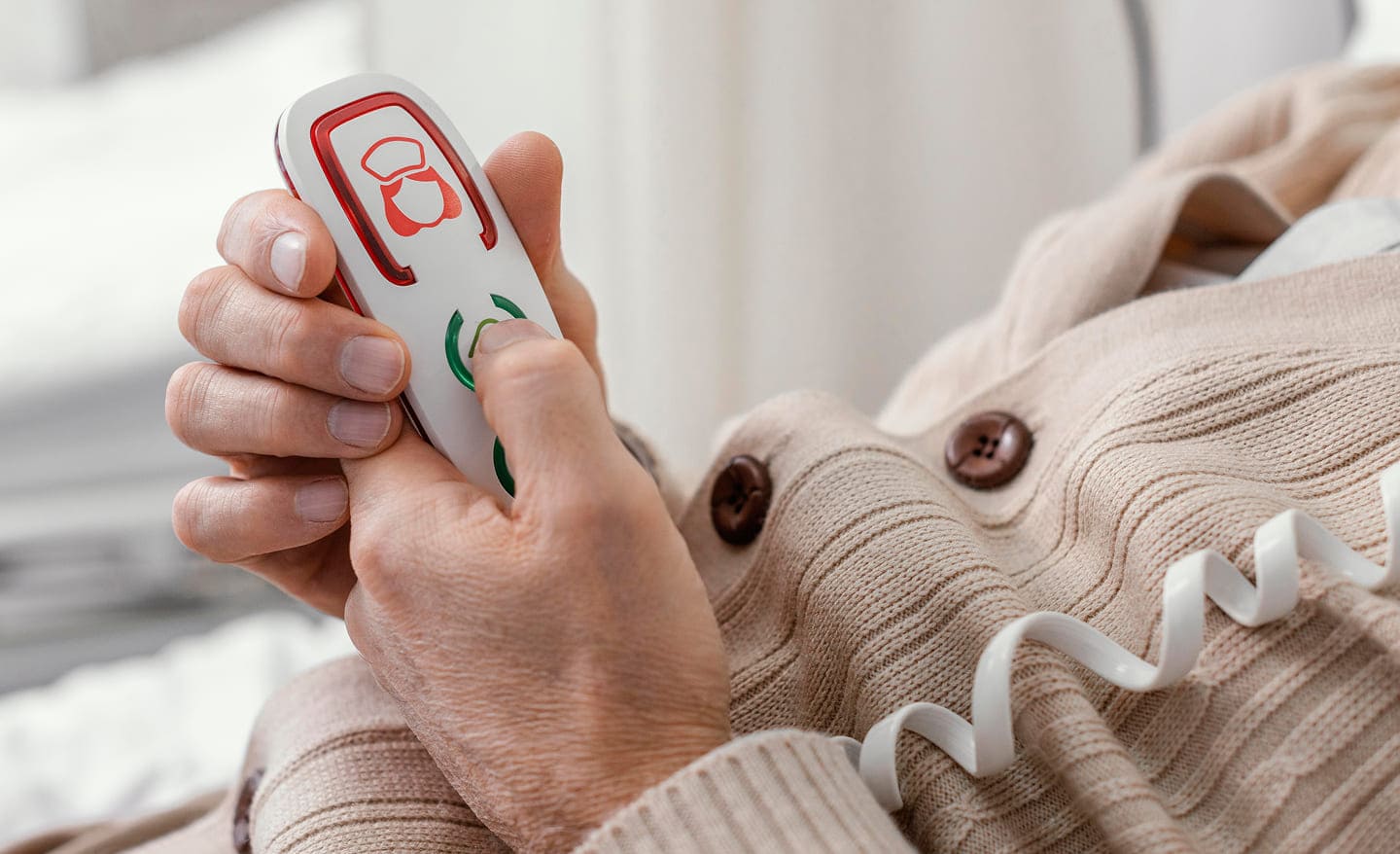
The next step will be to inspect the base of the hospital bed and the mechanical components attached to it. The base of the bed is where all the articulated magic happens. The best test is to try it yourself. Grab the remote, press on those buttons and make it move. First of all, does it even function? If it does, is it overly noisy and creaky? Do all the parts move fluidly, or does it seem labored and janky? Do the motors seem to work harder than necessary? Take the time to inspect the wiring and connections for any fraying, disconnections or outright breakage. While you’re at it, look at the condition of the paint and metal of the articulations. If you see rust, you see structural weakness bound to happen.
The mechanism is usually covered by the manufacturer’s warranty (if the bed isn’t too old). This doesn’t mean that their assistance will be completely free, but don’t let that stop you from trying. If all the parts and components seem functional and in good condition, a little cleaning and greasing will do the trick to restore it. If you are uncertain of the condition and of your decision, you can have the bed inspected by our repair specialist in our workshop.
The Parts and Components
The last thing on your checklist should be the parts and components. More specifically, if said parts are still available or discontinued. Manufacturers have a tendency to discontinue certain lines of production and support system for certain products, making them obsolete. If that is your case, repairing and maintaining your electric hospital bed might be difficult if not impossible. If the bed model is old enough, your bed rails might not comply with today’s safety standards. If parts are available, then that’s good news for you! The bed’s integrity and longevity can be maintained so long as you have access to these parts. Equipment of this size and price is not something you want to shop for every year. Once inside, it’s meant to stay.
The most important thing will be to check the availability of electronic components. A lock pin can easily be changed for another model or solution, but if your control module short-circuits and the part isn’t available, you’re dead in the water. The hand control pendants are usually not interchangeable as well. If the scissor mechanism is damaged or defective, but the control module is functional, your articulated bed will still be immobile. In fact, you risk further damaging the hospital bed by trying to use a defective model. To figure out if the electric bed you are looking at still has available parts, you simply have to look on the internet. The model number will be required. If that is not an option for you, you could always give us a call. Our experts will gladly help and guide you with the proper information.
Make yourself a checklist. Check every box and note any changes or repairs to be done. Weigh the pros and the cons of buying a used bed and compare your investment with the price of a new bed. The bed is in good condition, but you’ll need a new preventive care mattress? Your bed guard rails are full length and will need to be changed for half-length rails? Be certain to have inspected every nook and cranny possible before proceeding with your purchase. Used equipment might be more affordable, but you will have no warranty or guarantee to fall onto in case of a problem.
Be absolutely sure and confident in your decision. A used electric homecare bed can easily cost you the price of a new model if you aren’t wary enough. You can call on us for any verification, troubleshooting and to compare prices. Our team will gladly inform you about the possibilities, alternatives or to help you move your adapted equipment. Shop wisely and carefully!
-

How Do You Choose the Right Medical Chair?
A power lift recliner is usually recommended for elderly people who have trouble getting up or sitting down. But are there are other types of chairs suitable for other situations? Well… Yes! If you are limited in mobility and dexterity, then that condition affects you outside the living room as well. As luck would have it, LPA Medical has a complete lineup of specialized healthcare seating designed for comfort and, most of all, safety.
Thera-Glide Self-Locking Glider Chairs
Everybody loves a good rocking chair. But their moving frame makes them a tad unstable to get in or out. Not the safest seating option for someone requiring extra support. The armrests, seat and backrest all move when trying to brace against them for support, making it a risky endeavor. The auto-locking gliding chair is the safest way to enjoy a good rocking. With its nifty locking mechanism situated in the backrest, the chair only moves once a person is fully and safely seated. The chair locks as soon as weight is removed from the back trigger, letting someone push off the armrests that are now standing sturdy. A much, much safer alternative.
The chairs are built using a wide variety of measurements, types of backrests, framing materials and upholstery. There is a Thera-Glide chair out there for you, whether it be for personal or institutional use.
Versatile Tilting Room Chairs
Designed by healthcare professional for healthcare professionals, the Versatile room chair is often seen in hospital rooms and other institutions. The height of these high back chairs is adjustable, letting you get in and out with more ease. The backrest is reclinable for extra comfort. In fact, this room chair is more than a recliner, as it also tilts forwards. By tilting the chair forward, it is much easier to get up and safer to transfer to another surface.
As an institutional tool, the Versatile patient chair are robust and covered with upholstery resistant to liquids and antimicrobial soaps. The metal frame is solid, it’s easy to clean and has options and accessories. As a high back patient room chair, the Versatile takes the cake.
Utility Adjustable and Stackable Chairs
In some cases, a smaller solution is needed as a bigger chair would be too cumbersome. The perfect example is at the dining table where most chairs are too low. A straight chair is ideal, but our high backrest room chairs might be a tad too large in this case. This is where the Utility multipurpose stacking chairs come in the picture. They are easy to clean, the height is adjustable, weighed for extra stability and have a few accessories (such as front wheels) for particular situations and needs. A perfect solution to get the right support at the right height in the dining room or working at your desk.
Although useful in the home, these chairs were actually designed and developed for long-term care environments such as retirement homes, clinics and the like. They are robustly constructed and durable yet comfortable. Easy to clean and designed with antimicrobial materials. Stackable, equipped with handles, and simple to use, these chairs are an excellent solution in dining rooms, waiting rooms and common areas.
Finally, LPA Medical produces a wide range of medical that are convenient, simple to maintain, easy to clean and most of all that are safe. Whether for your home or institutional residence, the self-locking Thera-Glide gliders, the tilting Versatile patient room chair, and the Utility multipurpose stacking chairs are comfortable and reliable options. More often than not if a power lift chair is recommended to you, other options might work just as well.
At Équipements adaptés MCL, you can be certain that we will find the medical chair perfectly suited to your needs and usage. We have access to a wide range of medicalized seating and it would be our pleasure to help you in your process.
-
How to choose the right orthosis?
he field of orthopedics can seem complicated and intimidating when uninitiated. For unusual or specific cases, there are orthopedic specialists out there that can offer tailor made solutions. But what about the most common conditions? The world of over-the-counter orthoses can rapidly become daunting and heavy if not guided by a well-informed expert. Word to the wise: it is always a good idea to have your doctor or physiotherapist evaluate your needs or injury before launching yourself in your shopping. Your healthcare provider is best equipped to determine what condition ails you and guide you toward the proper treatment plan. A second piece of advice: your healthcare professional will be able to guide you towards the right type of orthopedic product to help you, but a renowned orthosis and splint expert will be able to guide you through the myriad of seemingly identical products.
That being said, there are a few generalities and tips we would like to share with you to help you through the process. Choosing the right orthosis or splint can be the difference between a speedy recovery or a surprise complication.
The Right Support, a Question of Terminology
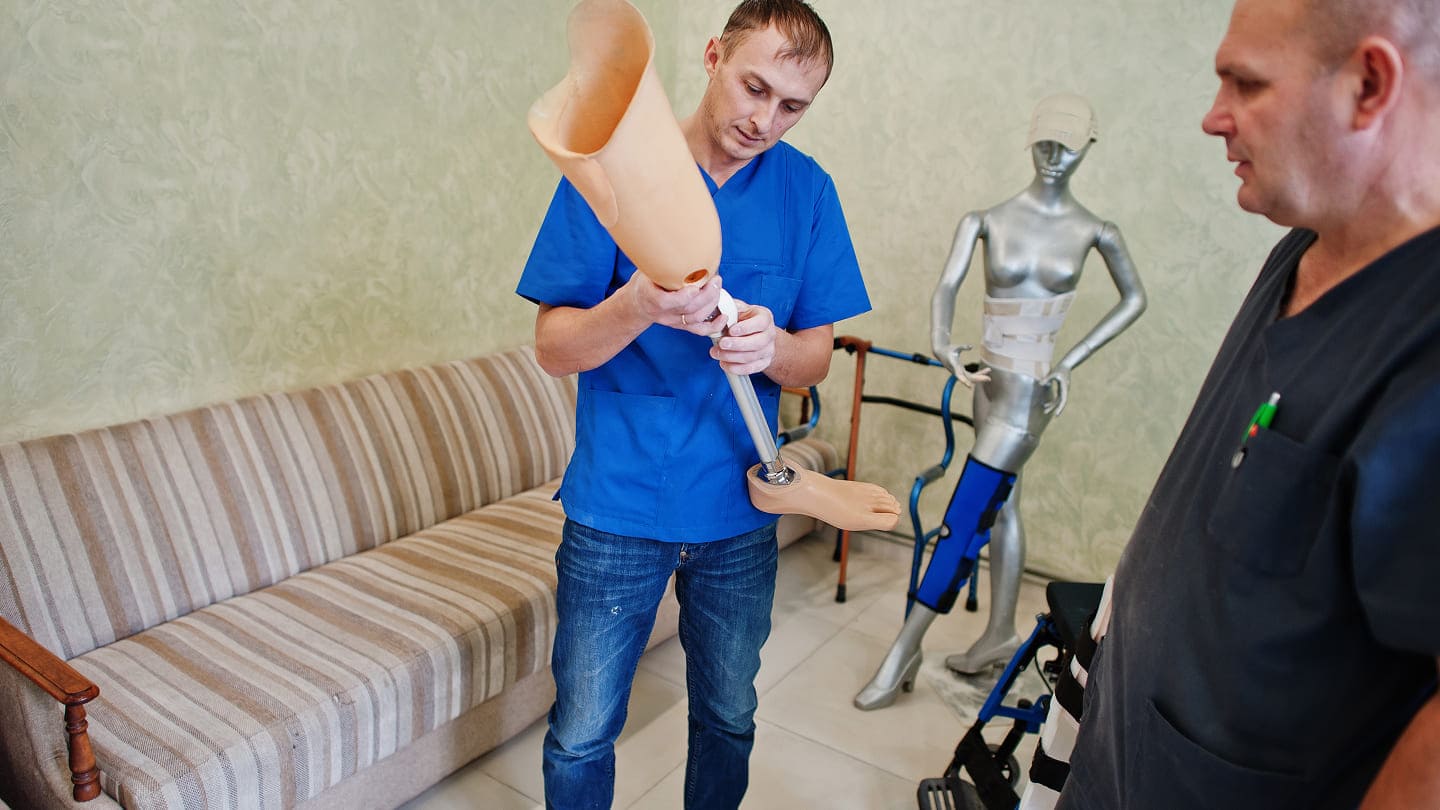
Orthosis, prosthesis, splint… They’re all the same, right? Wrong. A prosthesis replaces a missing limb or body part. Orthoses can wear many hats. To simplify the definition, they are generally used to assist or facilitate limb function and motion that has become difficult, painful or deficient. Think physiotherapy. And a splint? Well, that’s just a type of orthosis used to immobilize an injured or painful limb. A sling holding a broken arm in place is a good example. Here are a few more examples to help you understand:
- A breast form? We’re talking about a prosthesis here.
- A mechanical foot? Also a prosthesis.
- A back support belt? Bingo! The belt promotes proper posture and flexion during physical activities to insure adequate function and limit risks of injury. By supporting and assisting proper body function, the support belt falls under the umbrella of orthoses.
- A profiled stabilizing sling? If you remember correctly, it is an orthosis although more specifically called a sling.
Orthopedic braces and splints are usually paired with physiotherapy exercises, stretching and even neurostimulation treatments on occasion. These exercises are essential for recovery or to strengthen a weakened, possibly aging, articulation. This helps promote healing and recovery, as well as limiting the chances of further injury or complication.
Wearable Therapy
What about usage? As already established, orthoses are usually meant to stabilize or assist limb function and articulations. How this is achieved will depend on the situation and the needs of the user. For a hernia, a support truss will apply sufficient pressure to maintain everything in place. This will help alleviate pain while waiting for an operation. Are you pregnant or do you lift heavy loads regularly? A lumbar or maternity support belt will maintain correct posture and limit the risks of injuring yourself. Is it tendinitis or rhizarthrosis? A wrist or thumb stabilizing brace can help reduce pain due to over usage of your thumb or wrist while limiting damaging motions of the limb. You have a bum knee or an ankle sprain? A wraparound knee brace or ankle stabilizer (or even a walking boot) will help support your weight. And don’t forget, all of this is generally matched with stretching, exercises or physiotherapy.
As you can see, there is a veritable myriad of possible equipment and solutions out there. As stated above, it is good practice to check with your healthcare professional to ensure that your needs are met, and to have an informed specialist assist you in choosing the right product for you.
Head, Shoulders, Knees, and Toes
So, if a limb is painful, you just have to brace it right? Not quite. Depending on the condition, the part of the body to treat and support might be different than where the pain originates. A painful wrist might in fact be a pinched nerve in your neck or shoulder. Your caregiver will be able to diagnose what the situation is, and from there the correct type of orthosis will be determined. There is an orthosis, brace or splint for almost every body part and their associated conditions. Making a complete and detailed list would be a daunting affair that would only serve to further confuse a potential shopper. They can be grouped in 5 general anatomical regions to simplify the categorization: the neck and shoulders, the arms (elbow, wrist, hand), the abdomen and back, and legs (hips, knees, ankles, feet).
But remember: the painful region might not be the area to support. A painful and tingling wrist or fingers could be tennis/golfer elbow. In this case, the orthosis will be worn on the elbow and not the wrist or fingers themselves. Furthermore, if an orthosis is worn for extended periods or in an improper fashion it might have the inverse effect of atrophying the muscle instead of restrengthening it. It is of the utmost importance to follow the guidelines and exercises prescribed by your caregiver to avoid further aggravating the problem.
As you can see, the world of orthopedic braces and splints can be quite the affair. Whether you need ongoing support for a specific condition or temporarily for recovery, orthoses can help you find your Mobility, Comfort and Liberty once again. Whether it be a sling for a broken arm or a hernia truss, we can help you find the correct tool for your needs.
At Equipement adaptés MCL, we hold a wide variety of over-the-counter orthoses to cover a range of conditions and situations. Our experts can and will gladly help guide you towards the proper equipment. But we can’t stress this enough: your healthcare specialist will determine if an orthosis is the proper solution, and our experts can guide you towards the proper model for your needs. Happy recovery!